Physical AI in 2026: The Robots Actually Shipping Are Quadrupeds, Not Humanoids
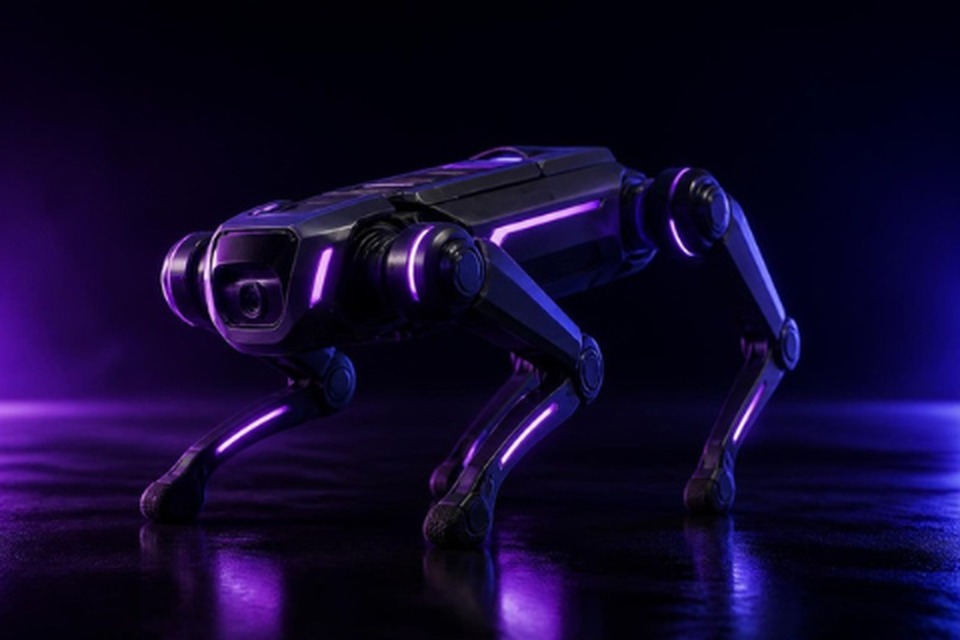
On August 19, 2026, Unitree Robotics listed on Shanghai's STAR Market at 150.8 yuan a share and closed its first day of trading up 460% — after touching an intraday peak near 630% — for an implied valuation around $50 billion. It was the biggest debut of 2026's Chinese IPO market by a wide margin, and it wasn't a chatbot company or a chip company. It was a robot maker, and specifically one best known for a four-legged robot you can order online for roughly the price of a used car. If "physical AI" — the current shorthand for AI systems that perceive and act in the real world instead of just answering questions about it — needed a single moment to mark its arrival as a real commercial category rather than a trade-show spectacle, this was probably it.
What "physical AI" actually means, and why NVIDIA is betting the company on it
Deloitte's 2026 Tech Trends report defines physical AI cleanly: "artificial intelligence systems that enable machines to autonomously perceive, understand, reason about, and interact with the physical world in real time" — as distinct from the preprogrammed industrial arms that have run factory lines for decades. NVIDIA has built its entire post-ChatGPT strategy around exactly this shift. At CES 2026 on January 5, Jensen Huang released the company's physical AI stack in one go: Cosmos Transfer 2.5 and Predict 2.5 (physics-based "world models" used to generate synthetic training data instead of waiting for robots to learn from expensive real-world trial and error), Cosmos Reason 2 (a vision-language model for reasoning about physical environments), and Isaac GR00T N1.6, a vision-language-action model built to give humanoid robots full-body control. The hardware got its own upgrade too: the $1,999 Jetson T4000 module delivers 1,200 FP4 TFLOPS in a 70-watt envelope — four times the previous generation — with the more powerful Jetson Thor aimed at next-generation humanoids. Huang's own framing left nothing to interpretation: "The ChatGPT moment for robotics is here." Boston Dynamics, Caterpillar, LG Electronics, Salesforce and surgical-robotics maker LEM Surgical were among the partners showing hardware built on the stack.
The robot actually on the floor right now looks like a dog, not a person
Humanoids get most of the keynote time, but the numbers tell a more useful story: quadrupeds are the physical AI hardware that's actually commercially mature today, and the market is already splitting into clear tiers by price and use case. A Research and Markets report published September 11, 2026 describes a genuinely bifurcated quadruped market — Unitree competing on vertically-integrated manufacturing and a dramatically lower bill of materials, against Boston Dynamics and Swiss maker ANYbotics competing on certification depth (cleanroom and ATEX Zone 1 ratings for hazardous environments) and enterprise support infrastructure. The price gap between those two approaches isn't subtle: Unitree's entry-level Go2 starts around $1,600, against roughly $74,500 for a Boston Dynamics Spot — a 46x spread that maps almost exactly onto "hobbyist and researcher" versus "certified industrial deployment." Deployment counts back up the split: ANYbotics has more than 200 ANYmal units in active service, China's Deep Robotics has roughly 600 units across 40-plus countries, and Boston Dynamics puts its own fleet at over 1,500 robots in customer hands, with third-party estimates running closer to 3,000. The report names Level 2 autonomy — a quadruped that can plan, navigate and position itself for a task with minimal human input, rather than being teleoperated — as the feature actually driving new purchases.
Humanoids, by contrast, are still mostly in the demonstration-and-pilot phase at any real scale. Boston Dynamics and Hyundai announced at CES 2026 that they're building a U.S. factory targeting 30,000 Atlas units a year by 2028, backed by a broader $26 billion Hyundai U.S. investment; Atlas itself is a serious piece of hardware — 56 degrees of freedom, a 2.3-metre reach, a 50-kilogram lift capacity, autonomous battery-swapping — but its price hasn't been made public, and every unit built in 2026 is already spoken for by Hyundai's own factories and Google DeepMind, with no external sales yet. Unitree's own G1 humanoid, at a comparatively startling $13,500, is the closest thing to a mass-market humanoid price point that exists today, and even the company's blockbuster IPO prospectus put 2025 humanoid shipments at just over 5,000 units globally — a real number, but still a rounding error next to quadruped sales volumes.
None of this makes humanoids a dead end. UBS's public projections, cited in Deloitte's report, still call for 2 million humanoids in workplaces by 2035 and 300 million by 2050, and manufacturing costs are already falling fast enough — from roughly $35,000 in 2025 toward $13,000–17,000 within a decade — to make that plausible. But for anyone advising a client on physical AI today rather than in 2035, the practical starting point isn't the humanoid on stage. It's the quadruped already doing site inspection, security patrols, or hazardous-area monitoring right now, at a price and certification level that actually matches the job — with the humanoid conversation being the one worth revisiting once Atlas-class hardware has a public price tag.
- AI goes physical: Navigating the convergence of AI and robotics — Deloitte
- NVIDIA Releases New Physical AI Models as Global Partners Unveil Next-Generation Robots — NVIDIA Newsroom (official)
- Unitree Robotics stock soars 460% in Shanghai IPO debut — Yahoo Finance
- Global Quadruped Robots Market 2026-2036: Unitree's Cost Advantage Is Splitting the Market — GlobeNewswire / Research and Markets
- Quadruped Robots: The 46x Price Gap — The Dynamics
- Hyundai Is Building a Factory to Make 30,000 Atlas Robots a Year — Startup Fortune