Context Window.
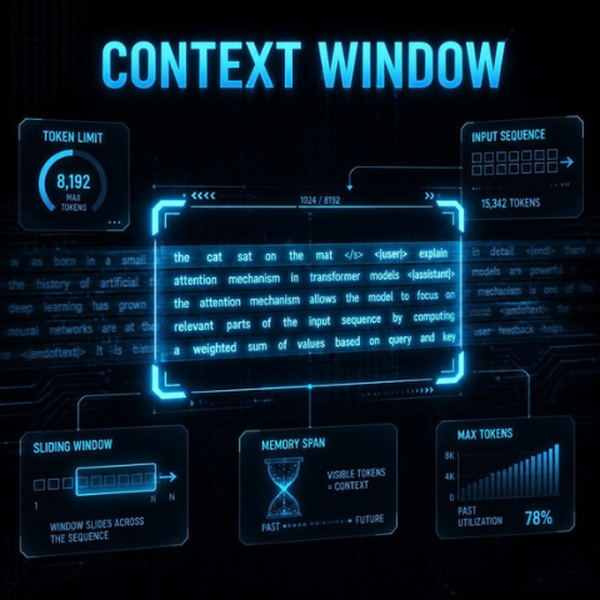
A context window represents the maximum volume of tokenized data that a large language model can process and reference during a single generation task. Measured in tokens rather than standard words, this limit dictates how much input text the model can actively analyze to produce its response. Any information exceeding this boundary is inaccessible to the model during that specific processing cycle.
In generative artificial intelligence, the context window serves as the active working memory of a large language model. Because these models process information in units called tokens — which represent segments of text rather than whole words — the capacity of this window is defined by token count. When generating a response, the system can only access and evaluate the data currently contained within this window. Any text exceeding this limit, such as an exceptionally long document or an extended conversational history, falls outside the model's immediate view. To manage information beyond this threshold, systems must rely on external techniques like summarization or retrieval. Consequently, a larger context window is highly advantageous, as it allows the model to handle expansive tasks, such as analyzing entire codebases or lengthy legal documents, without losing critical details to data compression.